
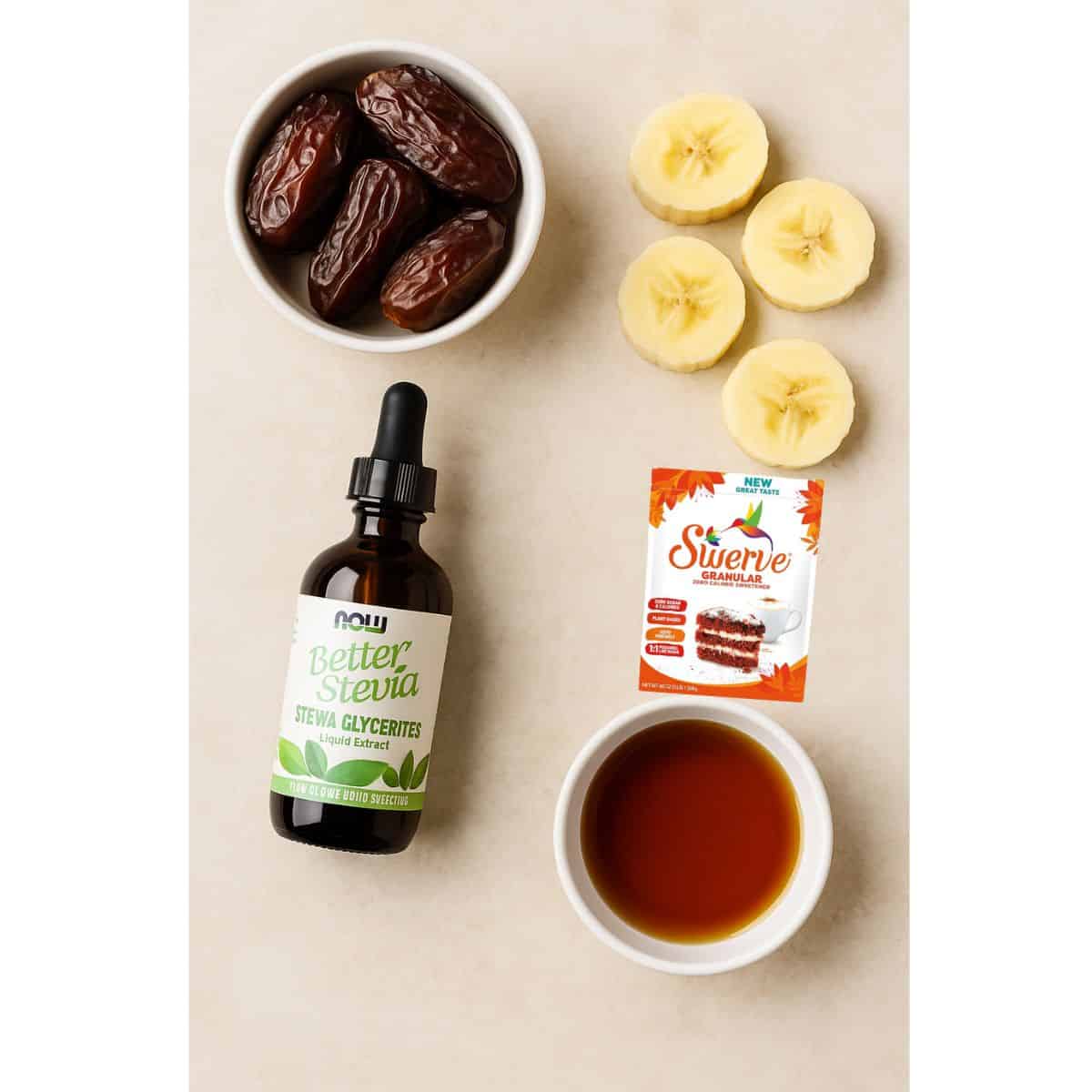
5 Best Vegan Sugars for Weight Loss in 2025
What This Post Is About
If you’re trying to eat healthier, lose weight, or simply feel better in your body, choosing the right sweetener matters more than you think. Traditional sugars like white and brown sugar are highly processed and calorie-dense. One tablespoon gives you about 49 calories with zero vitamins, zero minerals, and zero fiber, and because it hits your system so quickly, it makes you crave even more food.
Not ideal when you’re trying to lose weight and stay consistent with your fitness goals.
That’s why finding healthy, natural, best vegan sugars can make such a difference in your energy, your appetite, and your weight-loss results. In this post, I’m sharing my top 5 vegan sweeteners that actually taste good, keep you satisfied, and support your plant-based fitness lifestyle.
By the end, you’ll know exactly which vegan sweetener to use depending on your goals, taste, and recipe.
What Are the Best Vegan Sugars?
Below is a quick comparison of the 5 sweeteners I use the most in my plant-based kitchen. After the table, we’ll go through each one in detail.
| Sweetener | Calories | Sweetness Level | Best For | Why I Recommend It |
|---|---|---|---|---|
| Creamy, natural sweetness adds volume and satiety | 0 kcal | Very high | Hot drinks (tea, coffee), quick sweetening | No aftertaste, bottle lasts months, extremely cost-effective |
| Medjool Dates | ~66 kcal per date | Medium-high | Oatmeal, sauces, smoothies, baking | Naturally sweet, whole-food, fiber-rich, blends beautifully |
| Banana | ~105 kcal per banana | Medium | Smoothies, oatmeal, overnight oats | Creamy, natural sweetness, adds volume and satiety |
| Maple Syrup | ~52 kcal per tbsp | Low to medium | Pancakes, oatmeal, marinades, baking | Delicious flavor, vegan-friendly, rich caramel notes |
| Swerve | 0 kcal | Low | Baking, cookies, cakes, sauces | Zero calorie, no aftertaste, best sugar replacement for baked goods |
1. Now Foods Better Stevia Organic Glycerite.
Best for Hot Drinks (Tea, Coffee, Chocolate...).
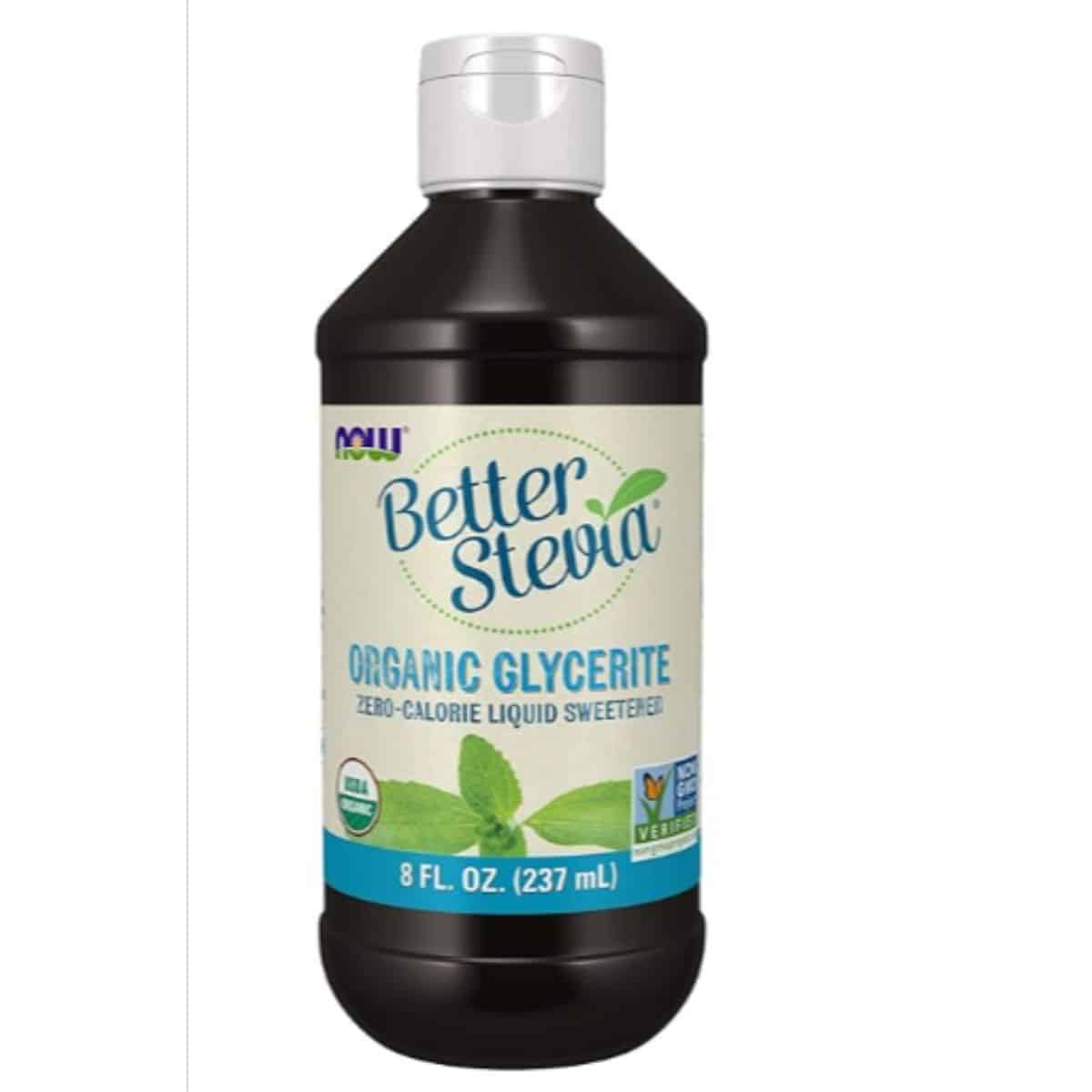
Now Foods Better Stevia Organic Glycerite
My everyday sweetener for tea, coffee, and hot drinks. It’s zero-calorie, super concentrated, and has no weird aftertaste. Just a few drops sweeten a full mug, and one bottle lasts for months. Clean, natural, affordable, and the easiest vegan sweetener to use daily.
This is really my absolute favorite sweetener for hot drinks.
Since discovering this product, I’ve used it every single morning and night in my green tea, chamomile tea, or ginger tea. I love it because it has no weird aftertaste, unlike most stevia products.
Origin and How It's Made
Stevia comes from the Stevia rebaudiana plant, a leafy herb native to Paraguay and Brazil. Indigenous communities have used stevia leaves for centuries to sweeten teas and herbal drinks.
Modern stevia sweeteners are made by:
- Harvesting the leaves
- Drying them
- Steeping them in water to extract the sweet compounds
- Filtering and purifying to isolate steviol glycosides
- Blending with glycerin to create a liquid that dissolves easily
Glycerin is also a plant-derived, sweet-tasting liquid that helps stabilize the stevia extract and gives it a smoother, cleaner taste.
Stevia is recognized as one of the healthiest sugar alternatives because it is:
- Plant-derived,
- Zero-calorie,
- Non-glycemic (does not spike blood sugar),
- Highly concentrated, so you use very little.
Nutrition (Macros for 1 serving of Stevia Glycerite)
| Nutrient | Amount |
|---|---|
| Calories | 0 kcal |
| Carbs | 0 g |
| Protein | 0 g |
| Fat | 0 g |
Key Benefits
- 0 calories, 0 sugar, 0 carbs,
- Extremely concentrated: 5 drops = perfect sweet,
- One bottle contains 1,481 servings (this thing lasts forever),
- Affordable at around $16.99 for an 8-oz bottle,
- Perfect for hot drinks and anything liquid.
Pricing
Around $16.99 per bottle (8-oz), last 4+ months even with daily use.
Product Pros & Cons
Pros
Cons
Here is your link to buy this excellent vegan sweetener.
2. Medjool Dates.
Best for oatmeal, sauces, smoothies, baking, and for those who don't like bananas.
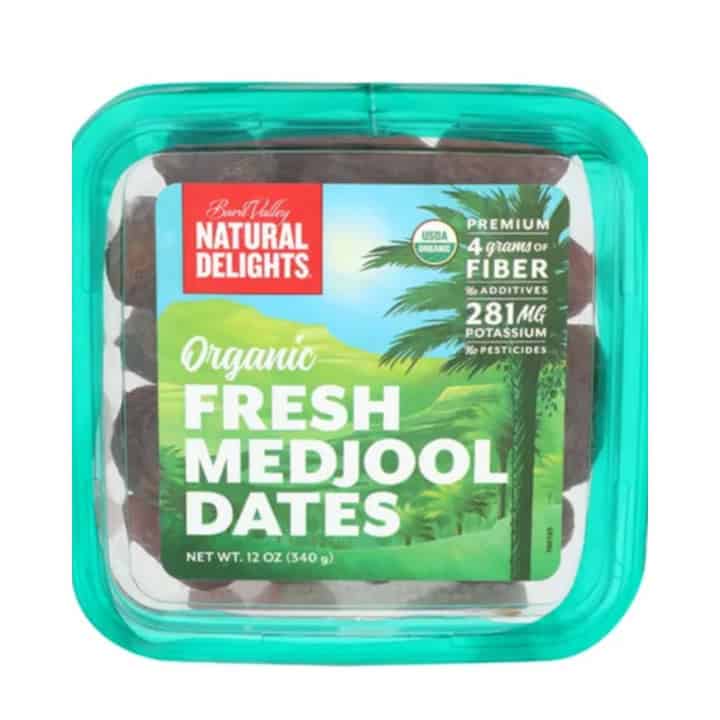
The most natural sweetener in this entire list. Medjool dates are large, soft, juicy, and naturally caramel-like. They blend beautifully in oatmeal, smoothies, sauces, and even baked goods. I use them all the time in hot oatmeal, overnight oats, and even in plant-based barbecue sauces.
Growing up, my parents always had dates at home, especially during Ramadan. Unfortunately, at the time, the dates looked weird to me, and I refused to eat them, but now they’re one of my favorite ingredients for whole-food sweetness.
Origin and How They're Grown
Dates come from the date palm, a tree native to the Middle East and North Africa. They thrive in hot desert climates.
Medjool dates are unique because:
- They are harvested as fresh fruit, not dried
- They stay soft and juicy
- They were historically used for energy during long desert travels
- They are a traditional food for breaking fast during Ramadan
A single Medjool date is packed with natural sugars, minerals, and fiber.
Nutrition (Macros per 1 date)
| Nutrient | Amount |
|---|---|
| Calories | ~66 kcal |
| Carbs | ~18 g |
| Protein | 0.4 g |
| Fat | 0 g |
Traditional Uses
Dates have been used for:
- Natural energy during travel
- Religious rituals
- Desserts and pastries
- Sweetening drinks and porridges
Today, they are one of the best whole-food sweeteners for plant-based cooking. Do not forget to remove the pits before consuming them, or buy pitted dates.
Why Medjool Dates Instead of Other Dates?
- Larger, softer, and sweeter (one Medjool can sweeten a whole bowl of oats, unlike smaller Deglet Noor dates),
- Higher natural moisture (blends easily without soaking),
- Turns into a smooth, creamy paste (perfect for smoothies, sauces, and “date caramel”),
- More nutrient-dense (higher in potassium, magnesium, and antioxidants).
And unlike many store-bought options, I use dates that haven’t been soaked in honey or syrup. Just pure fruit.
Key Benefits
- Natural whole-food sweetener,
- Adds fiber and nutrients,
- Wonderful for oatmeal, sauces, smoothies,
- Tastes amazing, even if small pieces don’t blend fully.
Pricing
Varies by store. Check at Costco if you can; often, they offer amazing prices there, or here at Amazon, around $12.57 for a 12 oz container.
Product Pros & Cons
Pros
Cons
3. Banana
Best for oatmeal, smoothies, baking, and to keep you full.
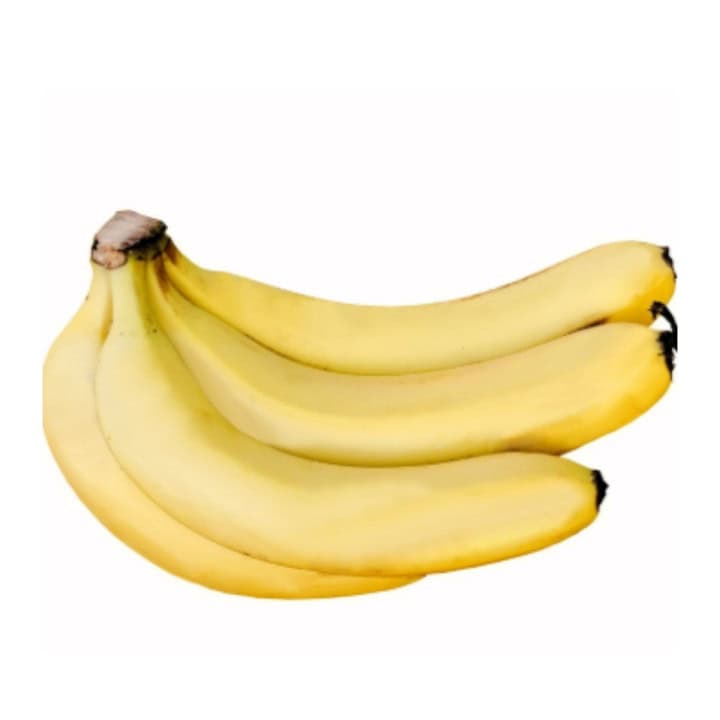
Bananas are one of the easiest natural sweeteners to use in vegan cooking. They bring sweetness and creaminess at the same time.
Personally, I don't enjoy eating a banana by itself, but blended in oatmeal or smoothies. it's perfect.
Origin and How They Grow
Bananas originally came from Southeast Asia and now grow in tropical climates around the world. They grow on tall, herb-like plants (not actual trees).
They’ve been eaten for thousands of years as a staple source of energy, and today they’re used in:
- Smoothies
- Breakfast recipes
- Desserts
- Whole-food sweetening
Nutrition (Macros per 1 medium banana)
| Nutrient | Amount |
|---|---|
| Calories | ~105 kcal |
| Carbs | 27 g |
| Protein | 1.3 g |
| Fat | 0.3 g |
Traditional Uses
Bananas have long been used:
- As quick energy for laborers and athletes,
- As a natural binder in desserts,
- As a creamy base for smoothies and breakfast bowls.
In vegan cooking, bananas are loved because they replace both sweetness and fat.
Key Benefits
- Natural sweetness,
- Adds creaminess to oats and smoothies,
- Higher carb content keeps you full longer,
- Works well with dates for a balanced sweet flavor.
Pricing
Very affordable. Found anywhere.
Product Pros & Cons
Pros
Cons
4. Maple Syrup.
Best for flavoring.
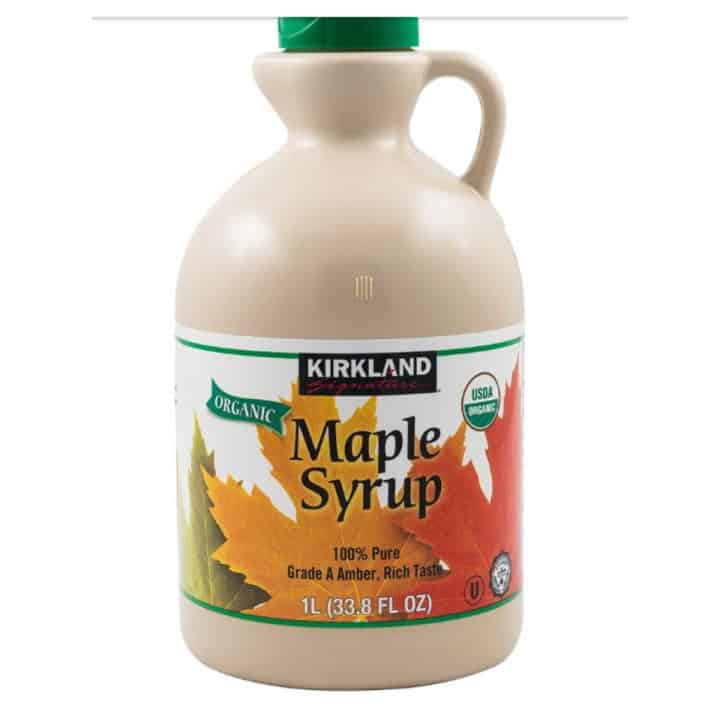
A vegan classic. And my weakness...truly...
It has a deep, amber, caramel-like flavor that is so yummy on pancakes, waffles, oatmeal, and in sauces. But because its sweetness level is low, you really need more than 1 tablespoon to feel it (for me at least), so I place it fourth on this list.
Origin and How It's Made
Maple syrup comes from the sap of maple trees. The process involves:
- Tapping the tree in early spring,
- Allowing clear sap to drip out,
- Boiling the sap to evaporate water,
- Concentrating the natural sugars into syrup.
Indigenous peoples of North America were the first to harvest maple sap. They used hot stones to evaporate the water and create syrup.
Nutrition (Macros per 1 tablespoon of Maple Syrup)
| Nutrient | Amount |
|---|---|
| Calories | ~52 g |
| Carbs | 13.5 g |
| Protein | 0 g |
| Fat | 0 g |
Grades of Maple Syrup: What's the Difference?
- Golden: light and delicate
- Amber: balanced, classic maple flavor
- Dark: deep, bold, perfect for baking
I personally buy the Costco brand because the quality-to-price ratio is excellent.
Key Benefits
- Vegan alternative to honey,
- Rich, delicious flavor,
- Great for toppings and baked goods.
Pricing
Mid-range. Costco is the best value. $14.99 for 1L of maple syrup.
Product Pros & Cons
Pros
Cons
5. Swerve.
Best for cooking and baking.
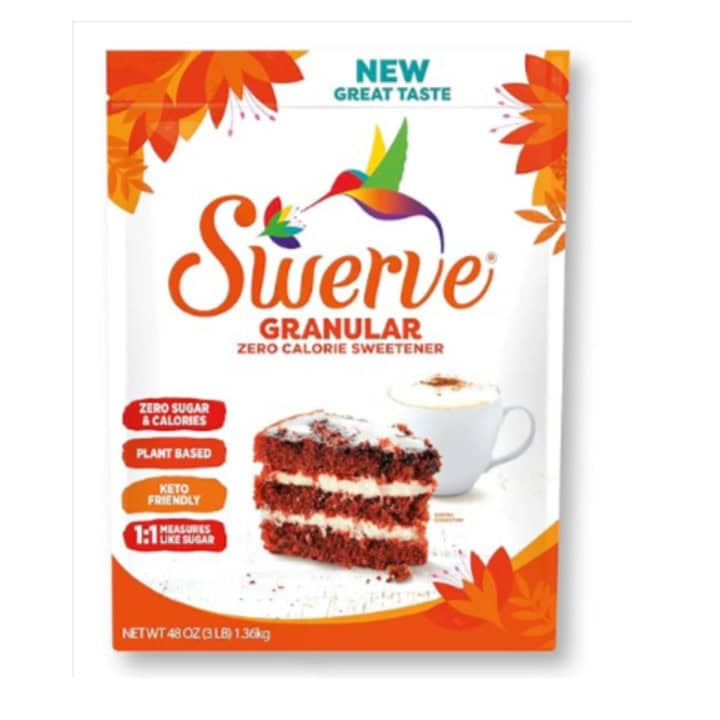
Swerve is the best cooking-friendly vegan sweetener. It has a neutral flavor and zero calories, making it ideal for cookies, cakes, muffins, and sauces.
However, I rank it last because it is:
- More expensive,
- Requires a larger quantity to reach a sweet flavor.
Origin and How It's Made
Swerve is made from:
- Erythritol, a sugar alcohol created through the fermentation of fruits or vegetables,
- Oligosaccharides, plant fibers,
- Natural flavors.
Erythritol is absorbed in the small intestine but not metabolized for energy, which is why it contains zero calories.
Nutrition (Macros per serving -2 teaspoon of Swerve)
| Nutrient | Amount |
|---|---|
| Calories | 0 |
| Carbs | 0 g (does not impact blood sugar) |
| Protein | 0 g |
| Fat | 0 g |
Key Benefits
- Zero calories,
- No aftertaste,
- Bakes almost exactly like real sugar,
- Multiple varieties (granular, powdered, brown sugar-style).
Pricing
Around $20 for one bag.
Product Pros & Cons
Pros
Cons
Conclusion
Sweetening your food on a vegan diet doesn’t have to be complicated. With these five options, you can choose the perfect sweetener for your goals, whether you're trying to lower calories, eat more whole foods, or simply make your oatmeal taste delicious.
My personal must-haves:
- Stevia glycerides for drinks,
- Dates and bananas for whole-food sweetness,
- Maple syrup for flavor,
- Swerve for baking and cooking.
Each one has a purpose, and once you learn which one to use, your meals become so much easier, tastier, and aligned with your wellness goals.
Your Turn!
If this guide helped you choose the right vegan sweetener, let me know in the comments! Which one will you try first?
And if you want more easy high-protein vegan ideas, explore my latest recipes or join my email list to get my plant-based meal plans, weekly tips, and new recipe alerts. Let’s make eating healthy feel simple, delicious, and totally doable.
FAQs
A vegan sweetener is any sugar or sugar-like ingredient that does not come from animals and is not processed with animal products.
This includes:
- Fruit-based sweeteners (dates, banana),
- Plant-derived extracts (stevia),
- Tree-derived syrups (maple),
- Sugar alcohols (erythritol blends like Swerve).
Choosing the right vegan sugar helps you:
- Reduce calories without sacrificing flavor,
- Avoid artificial sweeteners,
- Support a whole-food, plant-based diet,
- Manage cravings with natural sweetness,
- Improve digestion (thanks to dates and bananas).
Each sweetener fits a different purpose. That’s why having a few options on hand makes plant-based eating easier and more fun.
Stevia glycerides and whole-food sweeteners like dates are typically the best options.
You can, but the taste becomes more noticeable. Swerve is better for baking.
Yes, but they are whole-food sugars with fiber and nutrients.
Yes. It comes from tree sap, not animals.



Comments
No Comments