
How to Stay Full on a Vegan Diet
What This Post is About?
Let’s be honest.
Eating vegan doesn’t automatically mean eating for fat loss. Most of us, vegans, eat plenty of carbs and healthy fats, but not enough protein or volume to actually feel full.
So, when you cut calories, your meals look healthy, but you’re starving again an hour later.
This post is all about fixing that.
I’ll show you exactly how I adjusted my vegan meals so I could stay full on a vegan diet even while cutting calories and without feeling deprived.
You’ll learn how to balance your plate, how much protein you really need, how to time your meals smartly, and how to build satisfying low-calorie, high-density plates like those shared by two of my favorite plant-based women: Plantiful Kiki and Chelsea Mae.
Let's dive in.
Understand Why You’re Always Hungry
When you go plant-based, your meals naturally become lower in calories and fat without the meat.
That sounds good, right? This is ideal for a fat loss journey... But what happened in reality will surprise you.
When animal products are removed, they also remove a significant portion of protein and satiety from our meals. Then, most of the time, when we switch to a plant-based diet, we tend to lean more on meals that are high in carbs and fats, but also light in protein. Hello to delicious! Goodbye fullness.
Result: your hunger hormones (like ghrelin) spike back fast, and you crave more food even after eating.
The mistake I made myself at first was thinking that eating “healthy plant-based” was enough.
But the truth is, you can eat perfectly “healthy”, still feel hungry all day, and not lose any fat and weight.
The solution to stay full after every meal and lose weight/fat: balance each meal with
- A solid protein source, 30g minimum per meal
- A fiber-rich base (vegetables/salad/greens, beans, grains)
- A touch of healthy fat (no oil but avocado, nuts, or seeds)
That’s the fullness formula.
Prioritize Protein at Every Meal
Protein is the game-changer if you want to stay full on a vegan diet.
When I first tracked my meals, I realized I was eating barely 40 g of protein per day.
I relied on carbs and fat in most of my meals and used to think that all macronutrients (carbs, fat, protein) worked the same in the body.
Actually, they don't. The way your body processes carbs, fats, and protein has everything to do with how full you feel after eating. Let’s break it down simply.
🧠 How Your Body Uses Each Macronutrient
| Macronutrient | Digestion Speed | What It’s Used For | How Long It Keeps You Full |
|---|---|---|---|
| Carbohydrates | ⏩ Fast | Quick energy (glucose) | Short-term: hunger returns quickly |
| Fat | ⏸️ Medium to slow | Long-lasting energy, hormone support | Medium: gives satisfaction, but not “fullness” |
| Protein | 🐢 Slowest | Tissue repair, muscle building, hormone regulation | Longest: strongly reduces hunger hormones |
🔍 Why That Matters for Hunger and Weight Loss
- Carbs digest the fastest. They raise blood sugar quickly, then drop it fast too, which can make you hungry soon after (especially refined carbs).
- Fats digest more slowly, so they help meals feel comforting and satisfying. But fats alone don’t send strong satiety signals unless paired with protein or fiber.
- Protein takes the longest to break down and releases amino acids slowly. It also helps to reduce ghrelin (the hunger hormone) that signals your brain that you’re satisfied, and boosts GLP-1 and peptide YY, two hormones that make you feel full.
🥗 The Best Combo
For steady energy and lasting fullness, combine all three macronutrients but make protein and fiber your anchors.
Example: a big portion of tofu + a lot of veggies and salad + a little bit of quinoa + a little bit of avocado.
No wonder why I was hungry every two hours on my carbs and fat full diet.
🎯 Your primary goal is to consume at least 25–35 g of protein per meal.
This one shift will change everything for you.
My top vegan protein sources are:
- Tofu, soya curls, plant-based meats,
- Lentils, beans, and chickpeas,
- Edamame, plant-based milk, or yogurt,
- Vegan protein powders (mostly for smoothies and oats).
Here is an example of a meal high in protein that I love:
Lentil and Mung Dal Curry Soup (for 1 serving: 28 g protein, 340 cal, 6g fat)
Here are other options for dinner meals that are low in calories and high in protein and will keep you full.
If you want more variety, try PowerPlant Boss.
It builds your high-protein vegan meal plan automatically, ensuring a balanced, filling, and macro-correct diet.
Boost Fiber for Natural Fullness
You don’t have to eat less to lose fat: you just have to eat smarter.
Fiber is the second secret weapon because it slows digestion and expands in your stomach, keeping you satisfied longer.
That's why vegan bars are great for the protein content but a bad idea to eat them when you want to lose weight, because they lack the fiber part that will make you feel full for hours. Instead, when you eat a protein bar, you just want another one just after. This was a mistake I made, as I was immediately hungry after eating a protein bar and wanted to snack on something just 30 minutes later.
Now, I fill my meals with more fiber and feel full for hours.
✅ Daily target: 30–40 g of fiber.
Go-to foods:
- Oats, quinoa, chia seeds, flaxseeds,
- Lentils, beans, peas,
- Salads, kale, veggies (bell peppers, carrots, zucchini, spinach, cucumber...)
- Whole fruits instead of juices (Banana, apple, grapefruit, mango, papaya, pear, watermelon...).
When you combine fiber + protein, cravings disappear.
That’s what I call the fullness formula in action.
Add Volume Without Calories
If you’ve ever looked at your plate and thought, “That’s not enough food,” this is for you.
The secret is to fill your plate with volume, not calories. My secret: add a lot of lettuce, a side salad, to any meal.
This is how Kiki and Chelsea Mae approach their meals: big plates low in calories with high-density foods.
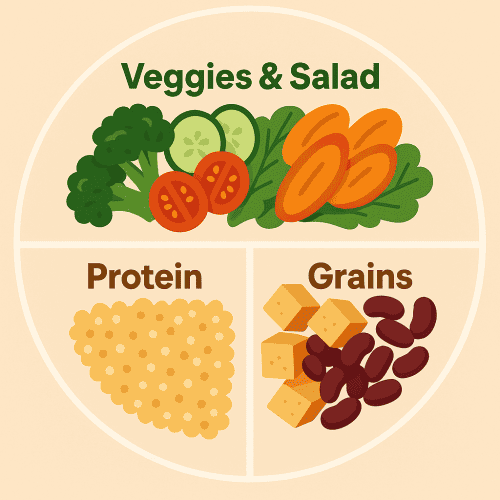
Here’s how to do it:
- On half of your plate: put lettuce and non-starchy veggies like tomato, peppers, broccoli, cauliflower, peppers, mushrooms...
- On one-third: a good amount of protein (tofu, beans, soy curls, plant-based meals...)
- On the last third: smart carbs like quinoa, rice, couscous, bread, ezekiel, oats, beans...
For dinner, focus on high-protein soups; they are great.
You’ll feel full and satisfied, even in a calorie deficit.
Don’t Skip Healthy Fats
When I first started cutting calories, I made a huge mistake: I eliminated fats completely.
My meals were dry and not satisfying; I was cranky, and I had big cravings all day.
Lesson learned: Fats don’t make you gain weight, too much fat does.
Healthy fats help you absorb vitamins, balance hormones, and feel satisfied.
Avoid oil because they are high in calories only with a small portion, but include things like:
- Nuts or seeds
- A little bit of avocado
Avoid “zero-fat” meals. They’ll only lead to fatigue and late-night snacking.
Manage Cravings with Meal Timing
Sometimes, hunger has less to do with what you eat and more with when you eat.
If you wait too long between meals, blood sugar dips and cravings explode.
And also, if you eat constantly, your digestion never rests, and fat loss slows down.
Here’s what works for me:
- Eat every 3–4 hours if you have active days.
- If you prefer fewer meals, try time-restricted eating (like 12:12 or 14:10). Get more info here on my post on Plant-based intermittent fasting.
I personally love having my breakfast around 10-11 am, and with a protein-packed oatmeal, it keeps me full and satisfied. - Add mini protein snacks in the afternoon when needed, such as edamame or a protein shake.
Remember: also eat when you’re truly hungry, not just because it’s “time.”
Hydration & Mindful Eating
Half the time, we confuse thirst with hunger.
When I feel snacky, I drink water first. Most times, that’s all my body wanted.
💧 Aim for: 4-6 glasses of water per day, the more the better.
Flavor it with lemon, mint, cucumber, or herbal teas if plain water bores you.
Also, slow down when you eat.
Put away your phone, computer, and chew fully. Give your brain time to recognize that you are eating, savoring your food.
It can take about 15–20 minutes after you start eating for your brain to receive and process the signals of fullness from your digestive system. You can check this article from WebMD, which explains more about this finding.
Meal Prep for Satiety Success
Feeling full starts in the kitchen.
If your fridge is empty, you’ll grab what’s easy, and that’s rarely high-protein or high-volume.
Use my 2+2+2 meal prep system:
- 2 breakfasts (example: protein oats, green smoothie)
- 2 lunches (example: tofu salad bowl, mexican bowl)
- 2 dinners (example: lentil veggie soup, chickpea pasta with roasted veggies)
Prep your protein bases (tofu, lentils, quinoa) and chop veggies ahead.
Rotate spices and sauces to keep it exciting.
If you need help, PowerPlant Boss will automatically build your 7-day high-protein, high-volume vegan plan.
Bonus: Real Women Who Made It Work
Need inspiration? Watch these two super helpful videos:
- 🌿 Plantiful Kiki: Lost weight eating high-volume, low-fat, whole-food meals.
Watch her video → - 🥗 Chelsea Mae: Balanced and realistic vegan weight loss journey.
Watch her video →
Their approach proves you can eat plenty, feel full, and still lose fat eating vegan.
Conclusion
Being vegan and feeling full is 100% possible, it just takes strategy.
Prioritize protein, load your plate with fiber and volume, include a little healthy fat, and plan ahead.
You’ll be amazed at how quickly your cravings calm down and your energy returns.
This lifestyle should feel nourishing, not restrictive.
Keep your meals big, your nutrition balanced, and your mindset focused on consistency, not perfection.
Remember, one day at a time.
👉 Try PowerPlant Boss
Build your personalized high-protein vegan meal plan that keeps you full while losing fat.
Your macros, meals, and grocery list done for you.
Start for free today →
Frequently Asked Questions
1. Why am I always hungry on a vegan diet?
Many vegan meals are high in carbs but low in protein and fat. Add 25–35 g of protein per meal, more fiber, and a small portion of healthy fat to keep hunger hormones steady.
2. What vegan foods are most filling?
Tofu, tempeh, lentils, chickpeas, quinoa, edamame, and high-fiber veggies like zucchini, broccoli, spinach, and carrots. These provide both bulk and nutrition.
3. How much protein should I eat as a vegan to stay full?
Aim for 0.8–1 g of protein per pound of body weight, or roughly 25–35 g per main meal. This amount helps control cravings and preserves lean muscle while losing fat.
4. Can intermittent fasting help me stay full?
Yes, a gentle 12:12 or 14:10 eating window helps regulate appetite and gives your digestion time to rest. Just make sure your meals are balanced when you do eat.
5. How can I meal prep to avoid hunger?
Batch-cook your proteins (tofu, lentils, quinoa), prep veggies, and build your week using the 2+2+2 method. PowerPlant Boss can generate your 7-day plan automatically.


Comments
No Comments